Monism, predicating a universal principle unity, therefore demands consistency in this principle throughout the whole and its parts.
The principle at hand, which can be considered the underlying reality principle, is therefore non-private — as in there is no lack of it, which also extends to there being no gradation of it, or lessening or greatening of its immanence in anything real. Such a gradation would imply that the real thing in question could be only constituted by the reality principle in part, and in another part some other thing — which contradicts monism.
It is this non-private and absolute consistency that many metaphysicians bordering on monism violate. Some examples of which include:
1. The posited first principle not being of a nature consistent with its following principles, such as if, in the Plotinic hypostatic model, the One is considered inconsistent with nous and soul.
2. Bodies being extrinsic to the soul, such as if the soul is held to be a subtle spatial body that possesses a material body, similar to metempsychosis/transmigration of the soul.
2.b As well as another interpretation of Plotinic soul-body dynamics, wherein the soul is not held to participate in the body, rather the body in the soul, however, bodies are maintained to emanate from the universal soul and thereafter participate therewith, which then creates the “individual soul”. However in this model matter and bodies are held to be non-being, i.e. not a progression of Plotinic (One, nous & soul) ontology. This would be to say that particular bodies precede particular souls and create the latter via their participation in the universal soul, leaving us with an ontological gap — because the generation of anything of an imaginary nature, such as bodies, must follow a kind of immaterial, ontological content consistent with the image in question: the particular body. That ontological content would be the particular soul and its condition (which defines its particularity).
3. In general, privation of the Good, that is if the Good is considered identifiable with the One — and considered to essentially be unity. If it is, ontological privation of the Good, and modeling ontological procession as less and less Goodness, should be impossible. A valid rectification of this is object-orientation as evil, which is to suggest ignorance of the Good, despite its presence, is the source of evil, which is consistent with the position that there is no principle of evil.
4. The inexplicability of any real, ontological thing, and even any apparent thing, as consistent with the reality principle. Of course, any actually real thing must subsume to reality itself — but this logic also extends in a sense to apparently real things. Mere appearances they may be, but the mechanism and operation behind that appearance, as well as essence of which it is an appearance of must still be explicable within a monistic system. That doesn’t mean that the existence of material needs to factor in such that a reality framework is part materialistic, rather that materiality needs to be explained as something occurring as due to the operation of the immaterial unto itself: like an image internal thereto.
All in all, the primary principle needs to not only be first as though first in a sequence — it also must be first among all things in that sequence. It must be absolute, entire. It’s completion dictates not that anything incomplete or partial indicates a lack of it, rather it is dictated that the whole resides wholly therein. A truer application of negating limit from the Absolute isn’t negating it from limited things, rather negating the idea that it “residing wholly therein” contradicts it residing anywhere else or ontologically preceding it, the Absolute is not bound to such a limitation, understood further as it not being a divisible thing to begin with.
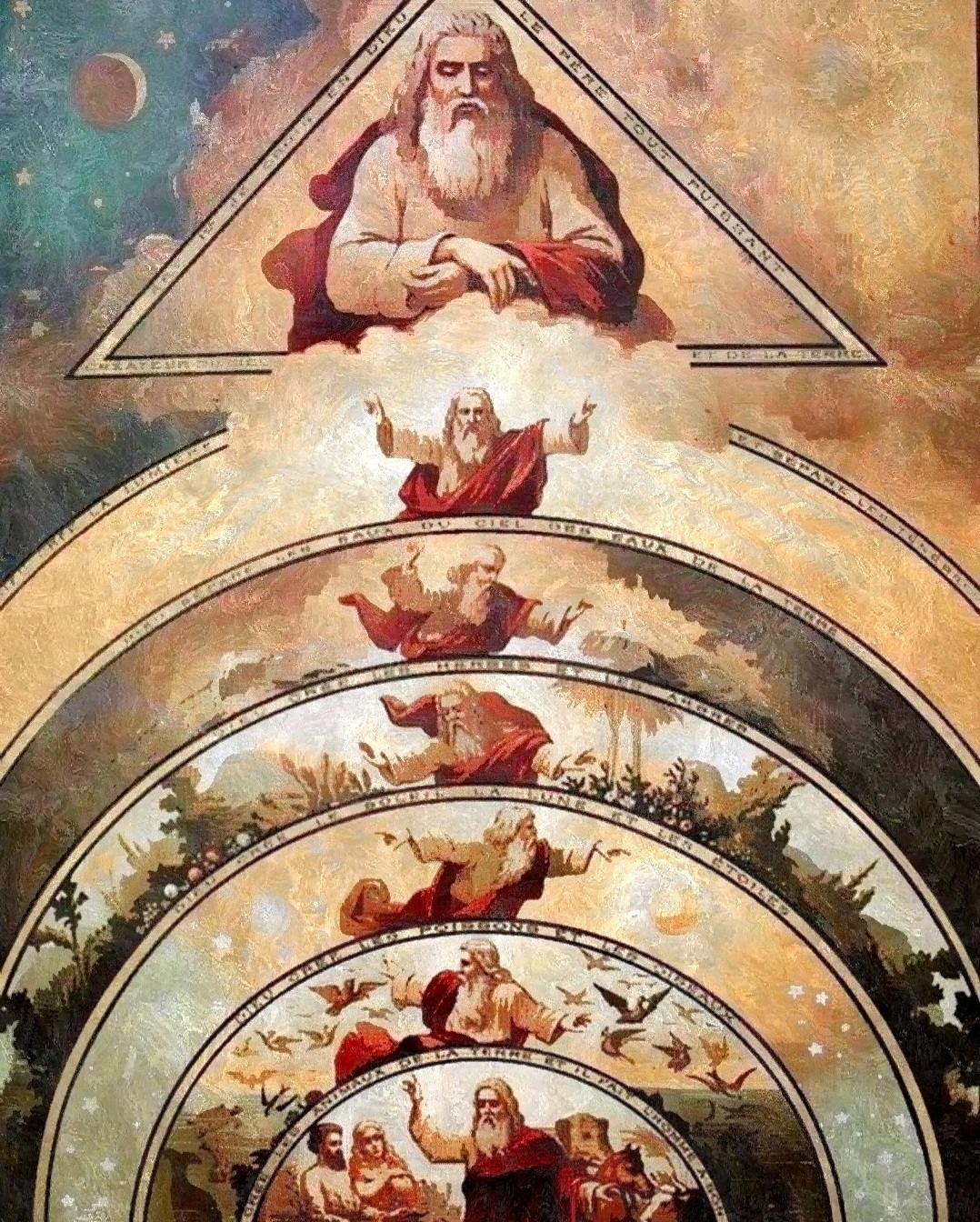
The reasoning herein is the reason for the motto: hen en pan kai pan en hen; One in All and All in One.
Discover more from BREAKING NOUS
Subscribe to get the latest posts sent to your email.
 BREAKING NOUS
Leave a comment